Home › Paint Correction
Swirls come out, not covered up.
Machine polishing that removes defects from the clear coat instead of filling them with glaze that washes off in a month. I do it as the first half of every ceramic coating — never as a job on its own — and every panel is done by hand, by me.
What correction fixes
That haze under the streetlights.
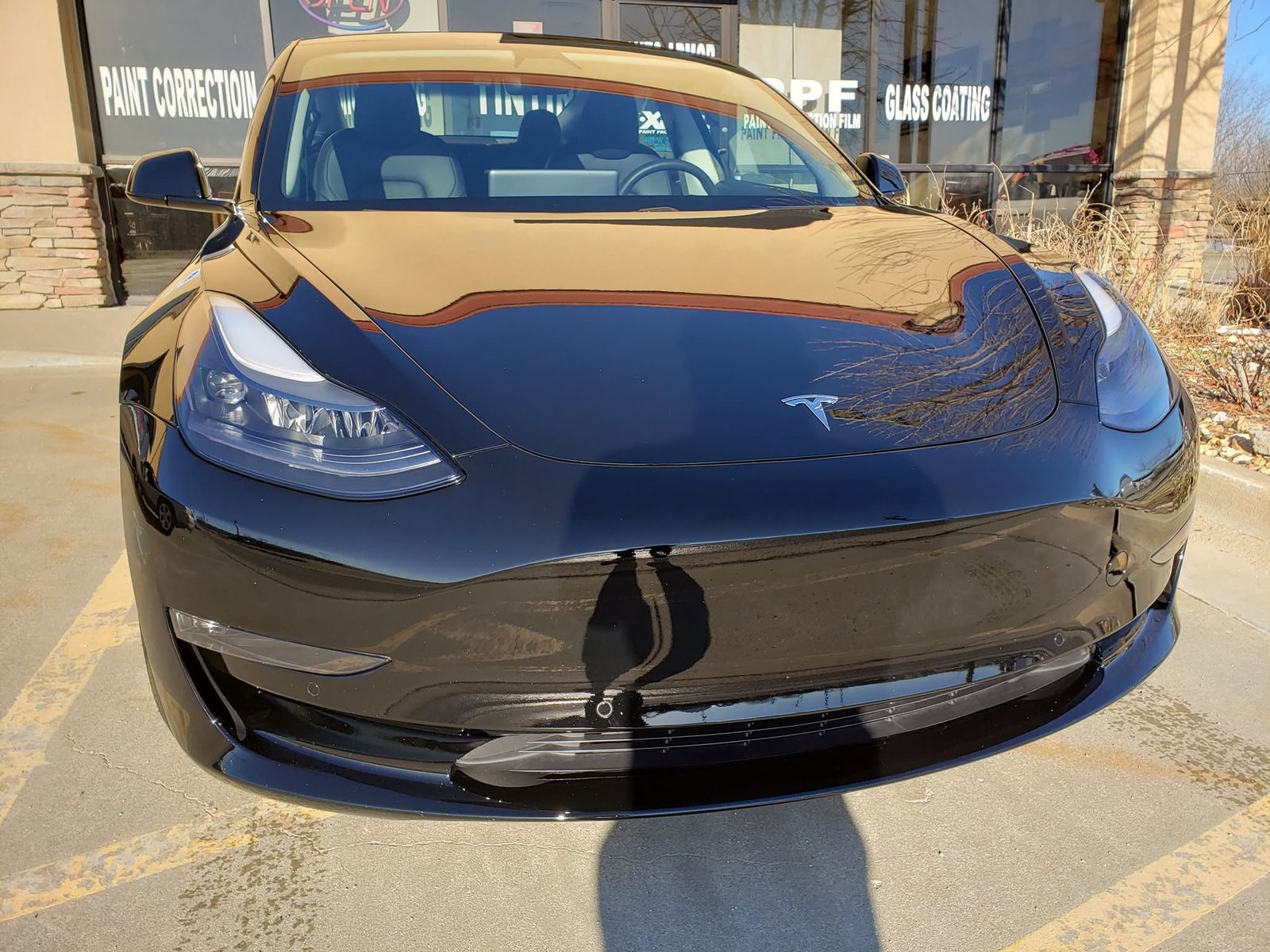
Every automatic car wash, every dry wipe, every dirty towel leaves fine scratches in your clear coat. Individually they are invisible. Together they scatter light, and that is the cloudy web you see on your hood in the sun or under a gas station canopy. Correction levels the clear coat back down so light reflects cleanly again — which is why a corrected car looks wet even when it is dry.
- Swirl marks and wash scratches
- Holograms and buffer trails from a previous shop
- Light scratches you cannot feel with a fingernail
- Water spotting and light etching
- Oxidation and dullness on older paint
How far to go
Every coating starts here. How far depends on your paint.
More stages means more defects removed and more hours in the car. I will look at your paint and tell you where the point of diminishing returns is for your vehicle — not everyone needs the top tier.
Enhancement polish
One stage. Knocks back the lighter swirls and brings the gloss up sharply. Enough for most daily drivers.
Two-stage correction
A cutting stage followed by a refining stage. Removes the large majority of defects and leaves the finish crisp.
Multi-stage
For neglected or show-bound paint. As many stages as the clear coat can safely give, panel by panel.
Then the coating
The corrected paint gets its ceramic coating right after. A coating seals in whatever is under it, which is why it gets fixed first.
How your correction gets done
Slow work, and it should be.
There is no fast version of this. Clear coat is finite — take too much and it cannot be put back. That is exactly why I would rather it be my hands on the machine than someone I trained last month.
Wash and decontaminate
Nothing gets polished while grit is still sitting on it. That is how paint gets scratched worse.
Inspection under lights
Panel by panel under proper lighting so we both know what is actually there before anything starts.
Test spot
I find the least aggressive combination that fixes your paint, then use that. Correction should remove defects, not clear coat.
Cutting stage
The defects come out, section by section, checked as I go.
Refining stage
The finish is polished back to full clarity so there are no hazes or trails left behind.
Coat it
Bare corrected paint should not stay bare. The ceramic coating goes on over it so the work lasts.
Common questions
Straight answers.
What correction cannot fix
If you can catch a fingernail in a scratch, it is through the clear coat and polishing will not remove it — that is a paint repair, not a correction. Deep etching, chips, and cracked clear coat are the same story. I will tell you that up front rather than take your money and hand back a car with the scratch still in it.
How long does it take?
Can I get just the correction, without a coating?
Is polishing bad for my paint?
My car is new. Does it need this?
Can you fix what another shop did?
Send me daylight photos of your paint.
Shoot the hood and roof in the sun. I can tell a lot from that and I will give you an honest read on what it needs.
Also in the shop